Writing Class 3-5 Reading and Writing for Assessment
Warm-Up for Reading and Writing Assessments
Reading helps you learn any subject. Writing helps you share what you've learned. That's why these two skills are critical in all your classes. That's also why major assessments test your ability to read and write.
What Is Assessment?
Listen to "What Is Assessment?"
Assessment is another word for test. Some assessments will test your ability to read and write. The reading and writing you do every day at school and home will help you get ready for these assessments. This unit will also help.
In the following activities, you’ll learn about close reading—reading to understand the focus statement, topic sentences, details, and vocabulary of the nonfiction texts you’re assigned. You’ll also learn about on-demand writing—writing to develop your own ideas during an assessment. Strong reading skills help you write and vice versa.
In this unit, you’ll learn the reading and writing skills that you need to succeed in nonfiction assessment. If you’d like to try out these skills, see the unit “Practice Test for Reading and Writing.”
Thinking About Close Reading
To read closely, you need to think about the ideas in a text. You can do this by asking and answering questions. For starters, use the 5 W’s and H.
Read closely.
Read the following explanatory paragraph. Answer the 5 W’s and H. Make a copy of this Google doc or download a Word template.
Listen to "Do Aliens Exist?"
Do Aliens Exist?
By Anne Wheelock
Most scientists believe that alien life exists. It’s really simple math. Our own galaxy holds about 60 billion planets that could support life, and there are at least a hundred billion galaxies. As a result, it’s unlikely that life exists only on Earth. Don’t get too excited, though. If life exists elsewhere, it’s most likely to be single-celled, like bacteria. Even if life is more complex, it isn’t necessarily intelligent. And even if it is intelligent, it is probably too far away to travel to it in a human lifetime. So, if life does exist elsewhere, we probably won’t meet aliens anytime soon.
- Who wrote this?
- What is it about?
- Where does the topic take place?
- When does it take place?
- Why is it important?
- How does it work?
Thinking About On-Demand Writing
To write on demand, you need to think quickly, express a clear idea, and support it with details. Answering basic questions can help you support an idea.
State and support an idea.
Answer the following questions. Make a copy of this Google doc or download a Word template.
- What do you think about the existence of alien life?
- Why do you hold this thought?
- How could you convince others to agree with you?
Write a paragraph.
State your idea about alien life. Then support it with details.
Closely Reading Nonfiction
To read closely, remember SQ3R—Survey, Question, Read, Recite, Review.
Survey, question, and read.
Use these instructions to closely read the following essay. Make a copy of this Google doc or download a Word template.
- Survey the text: Highlight the title, author, and headings.
- Question the topic and purpose: Write comments on the document.
- Read the text: Underline the focus statement and topic sentences.
Listen to "What Does the Fox Say?"

Recite and review.
Answer the following questions about the essay on animal idioms.
- What topic does the essay describe?
- Write down the focus statement (the sentence that names the topic).
- Write down the topic sentence about cat idioms.
- Write your favorite cat idiom (a detail that supports this topic sentence).
- What is the duck idiom from Britain? What does it mean?
- Use your imagination to come up with a “people idiom” that animals could say about us. Think from the point of view of an animal and come up with a clever saying. Explain what your idiom means.
Understanding Controlling Sentences
As you read, watch for two types of controlling sentences:
A focus statement tells what an essay or article is about. It usually appears at the end of the first paragraph.
Many features of games make them powerful tools for learning.
A topic sentence tells what a paragraph is about. It usually appears at the start of a middle paragraph.
To start with, games are fun, and fun actually promotes learning.
Find controlling sentences.
In the following brief article, underline each controlling sentence. Make a copy of this Google doc or download a Word template.
Listen to "The Game's the Thing"
The Game’s the Thing!
By Sara Chang
In the past, school work and games lived in two different worlds. Now, teachers use games to help students learn. Many features of games make them powerful tools for learning.
To start with, games are fun, and fun actually promotes learning. When students enjoy an activity, they naturally learn it faster than if they dislike it. Fun also causes students to repeat the activity many times, a key to learning. People quickly become experts at their hobbies not because they “study” but because they have fun.
Games often require players to learn concepts and skills. Before playing a game, students need to learn the rules. As they play the game, students discover strategies that can help them win. If games simulate situations in history or science, students learn about these subjects at the same time.
Games get students to work together in competition and cooperation. Learning is social. When you discover something new, you want to share it with others. In games, learning and sharing go hand in hand. Students have to work with and against others.
Adults use games all the time for training. People use flight simulators to train to be pilots or astronauts. Salespeople role-play interactions with customers to learn how to provide the best service. Police and rescue professionals stage disaster simulations to learn how better to respond. Games provide a safe, inexpensive way to learn from situations that are too dangerous or expensive in real life.
What games do you enjoy? Which ones have you mastered? What did you learn in the process? Next time you choose a game, think not just about the fun you’ll have, but also about what you will learn!
Analyzing Controlling Sentences
A controlling sentence does two jobs: It names the topic and gives a special thought about it.
Many features (topic) of games make them powerful (thought) tools for learning.
To start with, games (topic) are fun (thought), and fun (thought) actually promotes learning.
Analyze controlling sentences.
For each of these sentences, identify the topic and the special thought. Make a copy of this Google doc or download a Word template.
Inferring Controlling Sentences
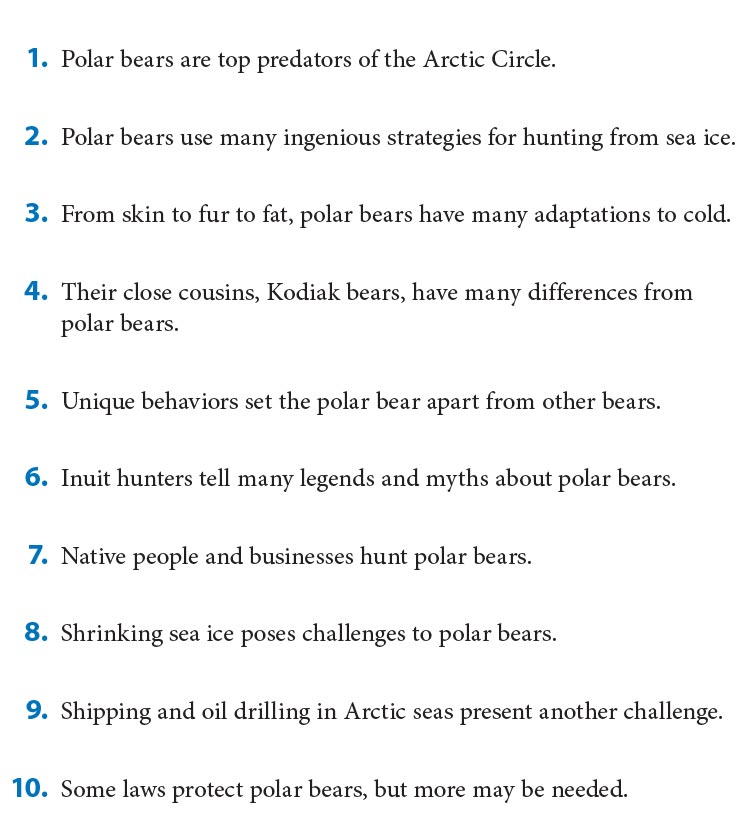
If you can’t find a controlling sentence, you can infer one—creating one of your own. Read the following paragraph. Then read a controlling sentence that one reader inferred by stating the topic and the special thought about it.
The dragon puppet stretches from 20 to 70 meters in length. The front has a head with wide eyes and a gaping grin. The other end has a bright tail piece. In between, hoops of bamboo or aluminum support the sections of the serpent’s body. Each hoop is suspended on a pole that is held by a dancer. The procession of dancers moves down the street, making the colorful Chinese dragon come to life.
The Chinese dragon puppet (topic) has many different parts (thought).
Infer controlling sentences.
For each paragraph, state the topic and a special thought. Make a copy of this Google doc or download a Word template.
A green dragon symbolizes growing things and bounty. A red dragon represents good fortune and excitement. Gold and silver, of course, stand for wealth, but they also create a glittering effect as the dragon moves along. Yellow symbolizes the stately empire of China. All dragons of all colors show happiness and pride.
Chinese dragons display power, wisdom, fertility, and wonder. They bring good luck. A dragon might look scary and angry, but it is a good creature and represents the power of the empire. The dragon creates a sense of beauty and dignity.
Finding Supporting Details
Each controlling sentence in a text is supported with different types of details. Note how the following focus statement is supported by different details.
Focus statement: Most people don’t give much thought to umbrellas, but these marvels of engineering have an interesting history.
Find supporting details.
Read the paragraph. Write down one supporting detail for each type listed below the paragraph. Make a copy of this Google doc or download a Word template.
Pizza may be seem like a modern food, but it has a long history. Throughout the ancient world, cultures created flat breads and added seasoning to make them tastier. The word “pizza” first referred to such a spiced bread in 997 C.E. in Gaeta, Italy. Pizza as we know it didn’t begin until the New-World tomato was introduced to Italy in the sixteenth century. At that point, it was a street food for the poor. In 1889, a chef made a pizza for Margherita, the Queen consort of Italy, using red tomato, white mozzarella, and green basil to represent the Italian flag. Modern pizza was born. Luciano DeCresenzo once said, “Neapolitans have always had their fast food. It’s called pizza.”
- Facts are ideas that can be proven to be true.
- Definitions tell what a word means.
- Examples show how an idea works in a specific situation.
- Descriptions tell what something looks, feels, sounds, tastes, or smells like.
- Quotations give the exact words of someone.
Using Evidence from Sources
Whenever you use ideas from a source, you need to name the source and the author. Usually, you put the ideas in your own words (paraphrase them).
Pizza in the Making
By Donald Archer
When you bite into a pizza, you’re tasting not just cheese, tomato sauce, and crust. You’re tasting history. Flat-bread treats started over two thousand years ago in ancient Greece and Rome. . . .
In the article “Pizza in the Making,” (Title) Donald Archer (Author) reports that people have enjoyed flat bread since the time of ancient Rome (Paraphrase).
If you use the writer’s exact words, put the words in quotation marks. If the quote is followed by a comma or period, put it inside the end quotation mark.
In the article “Pizza in the Making,” (Title) Donald Archer (Author) reports, “Flat-bread treats started over two thousand years ago.” (Quotation)
Paraphrase and quote.
Paraphrase and quote this selection. Mention the title and author. Make a copy of this Google doc or download a Word template.
When Dragons Dance
By Marion Lester
New York drops a ball to celebrate New Year, but Shanghai fills its streets with dancing dragons. The Chinese New Year can feature puppets that stretch a block long. The puppets are animated by . . .
Paraphrase:
Quotation:
Understanding Vocabulary
When you read an unfamiliar word, you need to figure out its meaning based on how it is used. You can use the following context clues to guess a meaning.
Write definitions.
Use the clues in each of these sentences to create definitions for the words in italics. Make a copy of this Google doc or download a Word template.
- Put the camera on the tripod so it doesn’t jiggle.
- My father wears bifocals to see both near and far.
- I am an introvert, so I prefer a good book to a loud party.
- The man suffered whiplash in his neck when his car was rear-ended.
- A callus is a tough spot on your heel, but callousness is a tough spot on your personality.
- Gorillas are animals in peaceful bands in the wilderness, but guerrillas are humans in warlike bands outside of civilization.
- After sky diving, my mom was happy to have her feet on terra firma.
Analyzing Writing Prompts
Often tests contain writing prompts that you must respond to. Your first step is to understand the writing prompt. You can use the PAST questions:
- Purpose? Why am I writing? (To explain? To demonstrate?)
- Audience? Who will read my writing? (Tester? Classmates?)
- Subject? What subject should I write about? (Games? Pizza?)
- Type? What type of writing should I create? (Essay? Letter?)
Sample Writing Prompt
What animal sayings do you use? Think of three different sayings and what they mean. Think of how you might use them. Write an essay that explains what a saying is and names the three animal sayings you like most. Define each. Imagine you are explaining the sayings to someone who is learning English.
Answers to PAST Questions
- Purpose?
To explain the meaning of the sayings and give examples
- Audience?
A person who is learning English
- Subject?
Animal sayings
- Type?
Essay
Note: Some writing prompts do not answer all of the PAST questions. If an answer is not given, infer one (come up with a reasonable answer based on the rest of the information).
Analyze writing prompts.
Read each writing prompt that follows. Answer the PAST questions about it. If the prompt doesn’t answer a question, infer an answer. Make a copy of this Google doc or download a Word template.
The Chinese celebrate New Year with a dragon dance. How do you celebrate New Year? What other special days do you observe? In an essay, explain a celebration or ritual that you know about. Tell what is usually done and why. Explain it to a reader who is new to the event.
- Purpose?
- Audience?
- Subject?
- Type?
The essay “The Game’s the Thing” explains how games can help teach. What games do you like? Choose a game, write an essay that explains it to someone new, and tell what the game teaches. Use a teaching voice to help others learn the game and want to play it.
- Purpose?
- Audience?
- Subject?
- Type?
You’ve read about the origin of pizza. What is your favorite food? How is it made? Why do you like it? Write an essay that names your favorite food, describes the ingredients, explains how it is made, and gives sensory details about it. Make your readers’ mouths water!
- Purpose?
- Audience?
- Subject?
- Type?
Writing On-Demand Essays
A writing assessment gives you a short time to write a response to a prompt.
You’ve read about the origin of pizza. What is your favorite food? How is it made? Why do you like it? Write an essay that names your favorite food, describes the ingredients, explains how it is made, and gives sensory details about it. Make your readers’ mouths water!
To do so, you should use a shortened form of the writing process:
Prewriting (5 Minutes)
Answer the PAST questions.
Purpose? Explain how it’s made
Audience? New person
Subject? A favorite food
Type? Essay
Write a focus statement.
Most Americans like tacos, but they haven’t had Mexican tacos.
List supporting details.
—Using cilantro, goat cheese, homemade white corn tortilla
—Making tortillas
—Cooking meat, cutting cilantro
—Putting taco together
Writing (Most Time)
Write a beginning that leads to the focus statement.
Tacos are probably the perfect food. Just fill a hard shell with seasoned ground beef, shredded cheddar, tomatoes, and lettuce. Wait! That’s an American taco. Most Americans like tacos, but they’ve never had Mexican tacos.
Write a middle paragraph to develop each supporting point.
A Mexican taco starts with different ingredients. First of all, instead of lettuce, Mexican tacos have spicy cilantro. . . .
Write an ending paragraph to wrap up the essay.
So, if you want a real taste of Old Mexico, try Mexican tacos. They’re spicier and better for you than tacos the American way . . .
Revising and Editing (5 Minutes)
Add, cut, rewrite, and rearrange to fix errors.

Respond to a writing prompt.
Read the writing prompt that follows and create an essay response. Make a copy of this Google doc or download a Word template.
Read the writing prompt.
Purpose?
Audience?
Subject?
Type?
Write a focus statement.
List supporting details.
Draft your essay.
Revise and edit your essay.
Read your essay and ask yourself the following questions. Correct any problems you find. Make a copy of this Google doc or download a Word template.
- Is my essay on target with the prompt and the PAST questions?
- Do I have a clear focus statement and topic sentences?
- Do I support them clearly with a variety of details?
- Are my beginning, middle, and ending paragraphs effective?
- Have I checked my spelling?
- Are all of my sentences complete (no fragments or run-ons)?
Comments
Post a Comment