Writing Class 3-5 Problem-Solving Essays
Warm-Up for Problem-Solution Essays
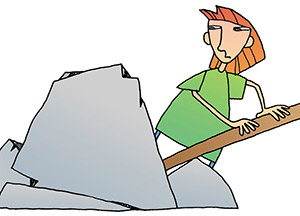
You might think of problem solving as something you do only in math class. In fact, problem solving is a part of all aspects of school and life.
Listen to “What Is Problem Solving?”
What Is Problem Solving?
To solve a problem, you first need to understand it. Then you need to think creatively to figure out ways to fix it. In this unit, you will write an essay that explains a problem in your school or community and offers a solution to it. Your goal is to make your readers care about the problem and want to be a part of the solution.
Thinking by Brainstorming
When you face a problem, brainstorming can help you think of possible solutions. Brainstorming means opening your mind to all possibilities, even wild ones. There are no wrong answers. Record every idea that pops into your head.
Brainstorming
A group of students brainstormed the following list of solutions to a problem. Often one possible solution led to another. When they ran out of ideas, the group reviewed the list and starred their three favorite solutions.
Problem:
A local park is dirty, and people no longer visit.
Solutions:
Write a letter to the mayor.
Write a letter to the editor of a newspaper.*
Call the parks department.
Ask the parks department to clean it.
Organize a fund-raiser.*
Build a new park.
Plant new trees.
Visit a different park.
Ask the city to clean it.
Organize a school service project.*
Pick up trash with friends.
Plant flowers.
Get new park equipment.
Move picnic tables to the pavilion.
Put in a skate park.
Research how other cities clean parks.
Brainstorm solutions with a group.
Gather with a group of classmates. Brainstorm solutions to one of the problems listed below. There are no bad ideas or wrong answers. Make a copy of this Google doc or download a Word template.
- Choose one of these problems.
- Your school is considering canceling gym class for the year.
- Someone in your class is being bullied.
- You are having trouble concentrating on homework at home.
- You are having trouble staying focused in class.
- Brainstorm possible solutions.
- Put a star next to your favorite three solutions.
Reading a Problem-Solution Paragraph and Essay
Now that you've warmed up your thinking about problems and solutions, you can read a sample paragraph and essay. Note how each writer explains a problem and argues for a specific solution.
Reading a Problem-Solution Paragraph
A problem-solution paragraph has three main parts. The topic sentence introduces the solution to a problem. The body sentences explain the problem and solution. The ending sentence calls readers to action.
Listen to "Helping New Students Fit In"
Sample Paragraph
Helping New Students Fit In
Topic SentenceComing to a new school is hard, so we should figure out how to make new students feel welcome. New students have to fit in with new classmates in an unfamiliar place with unfamiliar rules. Body SentencesThis problem can make them feel lonely. Instead of just expecting new students to make all the effort, we can help them fit in. One of us can volunteer to show the new student around and sit with him or her at lunch. The rest of us can introduce ourselves, learn the new student’s name, and share something about our school or ourselves. Ending SentenceTogether, let’s make our school a friendlier place to be.
Respond to the paragraph.
Answer the following questions about the paragraph. Make a copy of this Google doc or download a Word template.
- What problem does the paragraph focus on fixing?
- What solution does the author identify?
Reading a Problem-Solution Essay
A problem-solution essay has three main parts. The beginning paragraph introduces the problem in an interesting way and leads up to an opinion statement. The middle paragraphs describe the seriousness of the problem and outline the solution. The ending paragraph reviews the problem and solution and calls readers to action.
Listen to "A Welcoming Solution"
Sample Essay
A Welcoming Solution
Beginning ParagraphBeing the new kid is hard. I learned this two years ago when I arrived at a new school. It was scary because I didn’t know anyone. I felt lonely for a long time. Every school year someone else experiences this same feeling. Opinion StatementOur class should carry out a plan to help new students feel welcome.
Middle ParagraphsSomeone new arrives at school at least once a year. Coming to a new school means being around all new classmates, teachers, and rules. It’s easy to feel like a stranger. This lonely feeling makes it harder to learn and fit in. New students shouldn’t have to feel this way.
My class can make life easier for new students by using a buddy system. Before a new student’s first day, we will have the new student make a list of his or her interests. A classmate who shares one or more of these interests will act as the new student’s buddy for the first week. The buddy will demonstrate how to get around school, explain classroom rules, sit with the person at lunch, and hang out at recess. The buddy will also introduce the new student to other classmates.
The second part of the welcoming plan involves a group effort. During the new student’s first week, all classmates will take turns asking, sharing, and learning. For example, they will ask the new student’s name and where he or she is from. Then they will share their names and something about themselves. Finally, they will learn what the new student likes to do.
Ending ParagraphBoth parts of the plan will make current students responsible for helping new students fit in, not the other way around. Coming to a new school is hard enough. We shouldn’t make new students do all the work to fit in. Let’s reach out and help them feel like they belong.
Respond to the essay.
Work with a partner to answer these questions. Make a copy of this Google doc or download a Word template.
- How does the first paragraph introduce the problem?
- What is the essay’s opinion statement, and where is it located?
- Why is the problem serious?
- What solutions does the author offer for the problem?
- Do you think the solutions would be effective? Explain your answer.
Prewriting for Problem-Solution Essays
Before you start writing your essay, you need to think about some problems in your community and ways you could help solve them. These prewriting activities will help you examine a problem, come up with a solution, and gather and organize details before you begin a first draft.
Prewriting to Explore Problems
Consider problems.
Think about problems you have noticed at home, at school, and in your community. List them in the table. When you finish, put a star next to the one you feel strongest about. Make a copy of this Google doc or download a Word template.
One problem at home is | One problem at school is | One community problem is |
I get distracted when I work on my homework. | There’s too much shoving and pushing during recess. | Rosemont Park is dirty and unsafe.* |
Outline the problem.
Answer the following questions about the problem you will address in your essay. Your answers will help show why the problem is serious and needs a solution. Make a copy of this Google doc or download a Word template.
- What are some examples of the problem?
- Why is it a problem? Give at least two reasons.
- How does the problem affect me? Who else is affected?
- What might happen because of this problem?
Prewriting to Explore Solutions
Brainstorm solutions.
Brainstorm solutions to your problem. Record each solution that comes to your mind, even if it seems wild or unlikely.
Ways to solve my problem . . .
Write letter to the mayor.
Write letter to the newspaper.
Notify parks department.
Organize a fund-raiser.
Build a new park.
Ask the city to clean it.
Do a school service project.
Plant flowers.
Put in a skate park.
Clean it with friends.
Evaluate solutions.
Pick your three favorite solutions from the list. Answer questions about each solution. Then choose the best solution to the problem. Make a copy of this Google doc or download a Word template.

Writing a Problem-Solution Essay
Once you have explored a problem and its solution, you are ready to write a first draft of your essay. These writing activities will help you create a strong beginning, middle, and ending. You'll also read another student's problem-solution essay to see how all of the parts came together.
Writing the Beginning Paragraph
The first sentence is called the lead. This sentence is meant to capture your reader’s attention. In a problem-solution essay, the lead introduces the topic or problem in an interesting way.
Write a lead.
Review the lead-writing strategies. Write examples of your own. Make a copy of this Google doc or download a Word template.
- Ask a question about the topic.
Have you noticed all the trash at Rosemont Park?
- Start with a surprising fact or detail about the topic.
Last week, my brother cut his hand on a piece of broken glass at Rosemont Park. There’s glass everywhere.
- Tell a little story about the topic.
My family used to go to Rosemont Park every Sunday. . . .
Write your opinion statement.
Read about opinion statements. Then write an opinion statement that uses the word should for your problem-solution essay. Make a copy of this Google doc or download a Word template.
An opinion statement gives your opinion about the solution. This sentence tells what you believe should happen to solve a problem.
Our school should organize an event to clean up Rosemont Park.
Write your beginning paragraph.
Write your lead and then provide details that lead up to your opinion statement. Write the opinion statement as the last sentence in the beginning paragraph. Make a copy of this Google doc or download a Word template.
Lead Sentence
Detail Sentences
Opinion Statement
Writing the Middle Paragraphs
Write topic sentences.
For each middle paragraph, write a topic sentence that introduces a new part of the essay. Make a copy of this Google doc or download a Word template.
- Write a topic sentence that clearly states the problem:
Rosemont Park used to be a great place for play, but now it’s dirty and dangerous.
- Write a topic sentence that offers a solution:
A school service project could solve the park problem.
- Write a topic sentence that explains why or how the solution will work:
This solution will work for three reasons.
- Write topic sentences for any other middle paragraphs:
Write middle paragraphs.
Write your topic sentences. Add reasons, examples, facts, or observations to support your ideas. Use transition words or phrases to signal new information. Make a copy of this Google doc or download a Word template.
Transitions to Add Information
again
along with
also
another
for example
and
next
finally
as well
along with
in addition
then
Middle Paragraph 1
Topic Sentence
Detail Sentences
Middle Paragraph 2
Topic Sentence
Detail Sentences
Middle Paragraph 3
Topic Sentence
Detail Sentences
Middle Paragraph 4
Topic Sentence
Detail Sentences
Middle Paragraph 5
Topic Sentence
Detail Sentences
Writing the Ending Paragraph
Write your ending paragraph.
Try these ending strategies. Then combine some into an ending paragraph. Make a copy of this Google doc or download a Word template.
- Share a strong personal feeling about the problem.
I’m not ready to give up on Rosemont Park.
- Remind readers why your solution will work.
A school service project will make the park cleaner and safer for the whole community.
- Call readers to action.
Let’s make Rosemont a safer place to play.
Topic Sentence
Detail Sentences
Ending Sentence
Reading a Problem-Solution Draft
Read a sample.
Note how the writer put the parts together.
Listen to "Restoring Rosemont Park"
Restoring Rosemont Park
LeadMy family used to go to Rosemont Park every Sunday. Mom would set up a picnic while my brother and I played football in the big green field. Last month my brother cut his hand on some broken glass that was hidden from view. We haven’t returned since. I miss the park and want to make it safer for my family and community. Opinion StatementOur school should organize an event to clean up Rosemont Park.
Topic SentencesRosemont Park used to be a great place to play, but now it’s dirty and dangerous. There’s trash in the open fields and play areas. Graffiti fills the pavilion. Picnic tables are covered in dirt and pigeon droppings. Parks are supposed to be gathering places for family and friends. Instead, Rosemont Park has turned into a giant trash can.
A school service project could solve the park problem. Detail SentencesWith the help of our teachers, my classmates and I will clean up Rosemont Park. We will pick up trash, wipe down picnic tables, and paint a mural over the graffiti. We will even plant flowers and put wood chips around the play area.
This solution will work for three reasons. TransitionsFirst, it will make the park cleaner and more beautiful. Second, it will make Rosemont safer for play. Finally, it will teach us the importance of teamwork, volunteering, and community.
I’m not ready to give up on Rosemont Park. A school service project will make the park cleaner and safer for the whole community. It will also teach teamwork and volunteering. Call to ActionLet’s make Rosemont a safer place to play.
Revising Problem-Solution Essays
After you write a first draft, you'll be ready to start reviewing and revising. When you revise, you think about the "big picture," including the overall structure of your writing (beginning, middle, and ending) and the focus, main ideas, and supporting details you use. These activities will help you revise.
Revising to Choose Strong Support
In your problem-solution essay, strong reasons and supporting details will help you convince readers to care about the problem and agree with your solution. The best reasons and details are specific and tell something important about your subject.
Strong
A service project will make the park safer for play.
Weak
Cleaning will make the park better.
Choose strong supporting details.
Read the sentence pairs of supporting details. Put an “X” next to the sentence that is both specific and important. Make a copy of this Google doc or download a Word template.
- ___ Canceling gym class will be bad for kids.
___ Canceling gym class will make it harder for kids to stay in shape. - ___ Kids will lose a safe place to play if the rec center closes.
___ Kids will lose out if the rec center closes. - ___ Reading books introduces you to new people and ideas.
___ You should learn about new people and ideas. - ___ Swimming lessons make your life better and help you a lot.
___ Swimming lessons help you stay afloat if you fall into water. - ___ The playground equipment is no good.
___ The playground equipment is rusty and unsteady. - ___ Learning a second language teaches you about another culture.
___ Learning a second language helps you learn about another language.
Revising to Fix Exaggerations
An exaggeration is a statement that stretches the truth. Exaggerations make writing sound less convincing. If a reader spots too many exaggerations in your essay, he or she might not believe what you are saying.
Cleaning up Rosemont Park will make it the nicest park in the entire world. All we need to do is clean up the giant mountain of trash. It’s so high you need climbing gear to reach the top.
You can fix an exaggeration by telling the truth. Be specific about problems and solutions. Don’t stretch the truth to make problems seem worse or solutions seem better.
Revise exaggerations.
Read the paragraph, noticing which sentences include exaggerations. Then rewrite the paragraph, changing the exaggerations to make them sound more believable. Make a copy of this Google doc or download a Word template.
Our school needs new gym equipment. We have the worst equipment in the history of the state. Our basketball goals have bent rims and no nets. We have like 1,000 worn down and deflated kick balls. Our jump ropes are fraying at the edges. Finally, I’m certain a hungry monster took a bite out of every Nerf ball.
Revising with a Peer Response
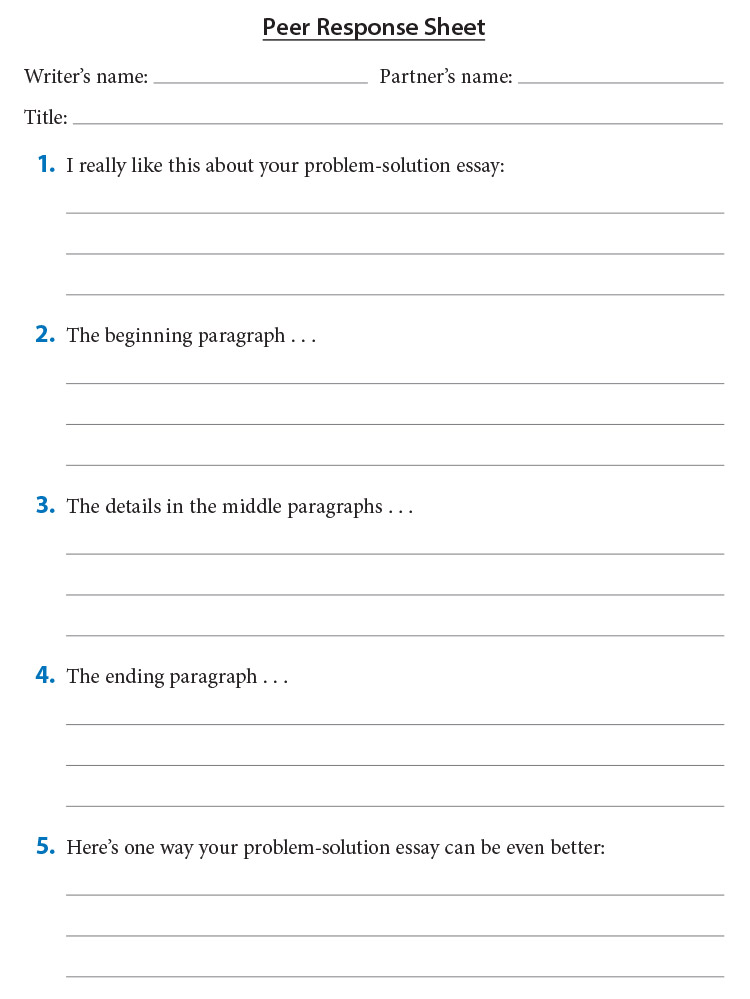
Share your writing.
Have a trusted classmate read your essay and complete the form. Make a copy of this Google doc or download a Word template.
Revising in Action
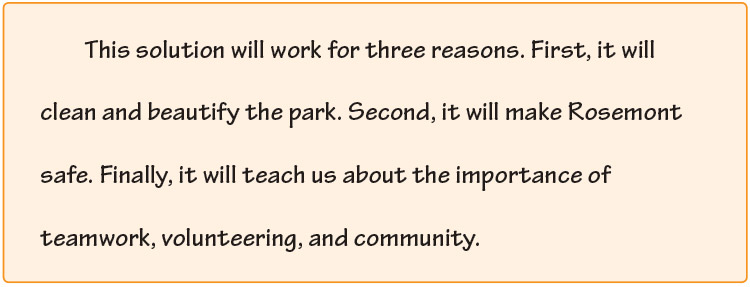
When you revise, you add, delete, rewrite, and rearrange your writing to make it clearer. Here are some revisions to “Restoring Rosemont Park.”
Paragraph Before Revisions
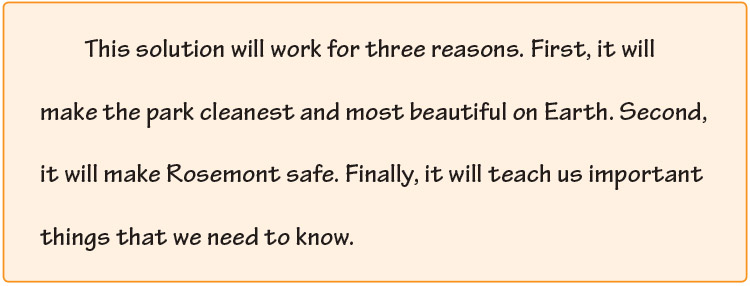
An exaggeration was fixed and a specific reason was added.
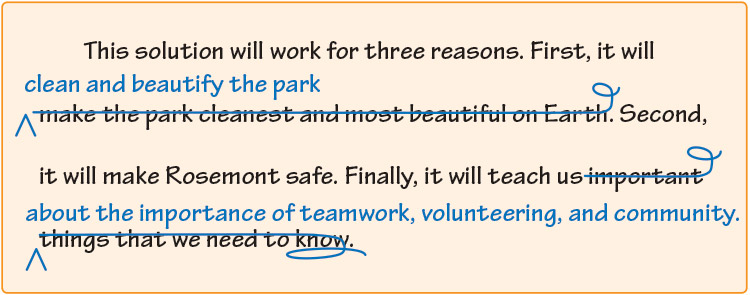
Paragraph After Revisions
Revise with a checklist.
Read each line. When you can answer each question with a yes, check it off. Make a copy of this Google doc or download a Word template.
Developing Your Ideas
- Does the essay address a current problem?
- Does it offer a solution to the problem?
- Is the opinion statement clear, using the word “should”?
- Do I feel strongly about my opinion?
- Do strong reasons and supporting details support the opinion?
Structuring Your Ideas
- Does the beginning paragraph start with an interesting lead?
- Does the beginning paragraph end with a clear opinion statement?
- Do the middle paragraphs explain the seriousness of the problem, offer a solution, and show why the solution will work without exaggerating the truth?
- Does the ending paragraph end by calling readers to action?
- Do transitions connect ideas?

Editing Problem-Solution Essays
After revising your problem-solution essay, you need to edit it to correct any remaining errors. You'll look closely at sentences, punctuation, capitalization, grammar, usage, and spelling. The following activities will help you edit your essay.
Editing for the Future Tense
When you write about something that hasn’t happened yet, you should add will before the base form of the verb. This will change the sentence to the future tense, expressing action that will happen later. In a problem-solution essay, use the future tense to predict what will result if a solution goes into action.
A school service project will clean and beautify the park.
In this example, the helping verb will shows that the verbs clean and beautify happen in the future.
Use the future tense.
Rewrite the following sentences in the future tense. In some cases, you will have to change the spelling of the main verb. One example is provided for you. Make a copy of this Google doc or download a Word template.
- I caught a butterfly.
I will catch a butterfly.
- I walk home from my neighbor’s house.
- We clean the kitchen.
- Workers painted the walls white.
- My family goes to vacation in Florida.
- My classmates and I perform in a play at the end of the year.
- The rain cools down the pool water.
- What happens next?
Editing to Use Commas in a Series
You can combine three or more similar sentences by creating a series. The series should be connected by commas and a connecting word (and or or).
Short, Choppy Sentences
We will clean the dishes. We will empty the trash can. We will wipe down the counter.
Combined with Commas in a Series
We will clean the dishes, empty the trash can, and wipe down the counter.
Combine sentences to create a series.
Combine each group of sentences with commas and a connecting word. Some words may need to be changed to make the sentence work. Make a copy of this Google doc or download a Word template.
- You can improve your health by exercising. You can eat fruits and vegetables. Another way is taking vitamins.
- We talk. We laugh. We play cards.
- To do well on my test, I will pay attention in class. I will study hard. I will get plenty of sleep.
- The fourth graders play football at recess. The fifth graders play football at recess. The sixth graders football at recess, too.
Editing in Action
When you edit, you check to make sure your essay is correct.
Paragraph Before Edits
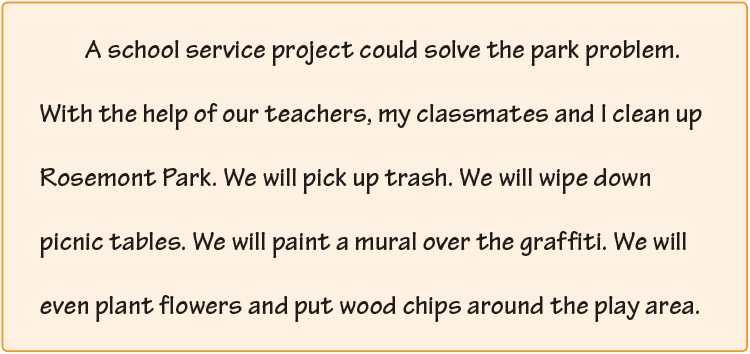
A verb was changed to the future tense and sentences were combined into a series.
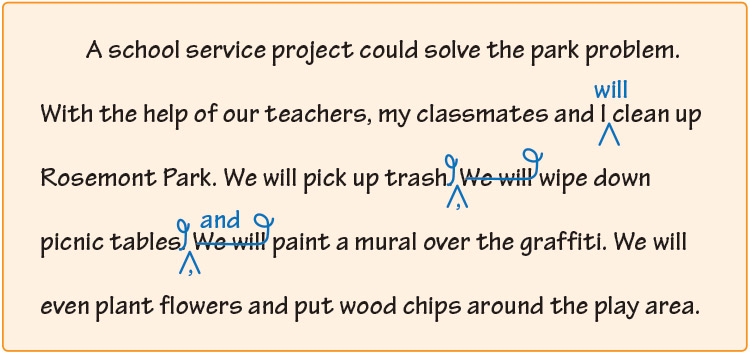
Paragraph After Edits
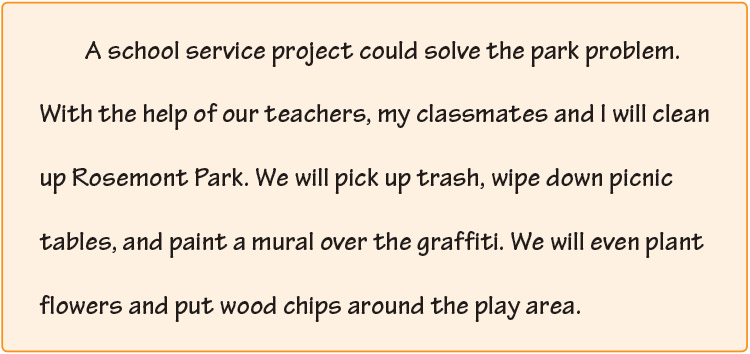
Edit with a checklist.
Read each line. When you can answer each question with a yes, check it off. Make a copy of this Google doc or download a Word template.
Checking Grammar and Usage
- Are the correct verb tenses used with actions?
- Are words used correctly (your/you’re, their/they’re, its/it’s)?
- Do subjects and verbs agree in number? (Manny and I were laughing, not Manny and I was laughing.)
- Are sentences complete (no fragments or run-ons)?
Checking Capitalization, Punctuation, and Spelling
- Are first words in sentences capitalized?
- Are commas used correctly in a series?
- Are all first words and proper nouns capitalized?
- Are words correctly spelled?
Publishing a Final Copy
Create a final copy of your writing.
Include your editing changes and read over your work a final time. (If you are working on a computer, spell check your work.)
Reflecting on Your Writing
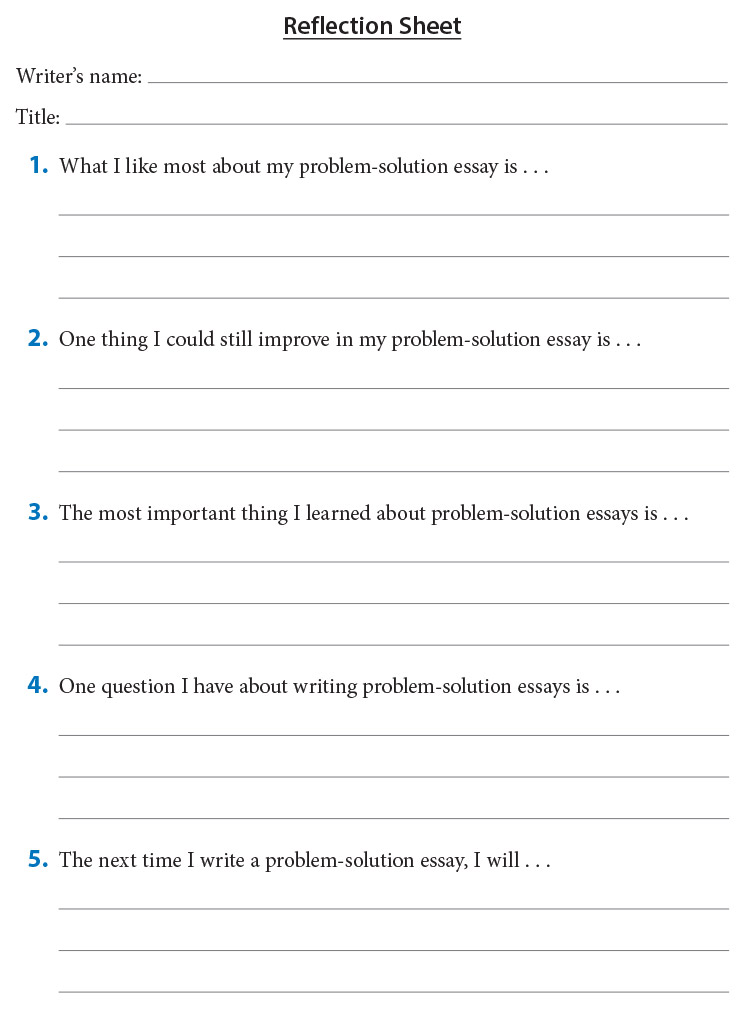
Reflect on your writing.
Complete the following form to think about what you learned. Make a copy of this Google doc or download a Word template.
Comments
Post a Comment