Writing Class 3-5 Practice Test for Reading and Writing
Practicing for Assessment
Reading and writing tests measure important learning skills. You can do your best on such tests by reading and writing every day. You can also get a better score if you practice for assessment.
How Can I Practice for Assessment?
Listen to "How Can I Practice for Assessment?"
The best way to practice for a reading and writing assessment is to take a practice test. This unit asks you to closely read information and write about it, just as you will do on actual assessments.
You’ll find interesting articles to read and respond to. You’ll also get to watch a video. In the end, you’ll need to take the information you discover and use it to write an informational essay of your own.
If you would like more help with close reading and informational writing, see the unit “Reading and Writing for Assessment.”
Reading a Practice Assessment
Some tests ask you to closely read and respond to explanatory articles and then use them to write an essay. One technique for reading closely is SQ3R:
- Survey the headings, illustrations, beginning, and ending of the text.
- Question what the text is about and what you expect to learn from it.
- Read the text carefully.
- Recite the main points covered in the text.
- Review the material, thinking about how it relates to other things you have learned.
Closely read source 1.
Use SQ3R to closely read the following text.
Listen to "Source 1: King of the Butterflies"
Source 1
King of the Butterflies
By Gabriel Garcia
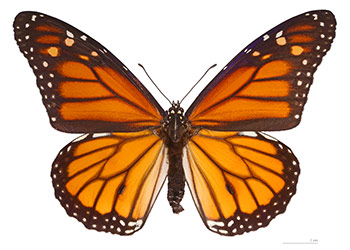
By Didier Descouens (Own work) [CC BY-SA 4.0 (http://creativecommons.org/licenses/by-sa/4.0)], via Wikimedia Commons
1 We’ve all seen them flashing through our back yards—the gold-and-black kings of the butterfly world. Monarch butterflies are so familiar that you may be surprised to learn about their many secrets.
Bad Taste
2 First of all, did you know they are poisonous? Their bright colors say so! Insects often use bright colors to warn predators to stay away. Delicious, nonpoisonous creatures don’t call attention to themselves.
Milkweed Munching
3 Monarchs get their poison from their favorite food: milkweed. Milkweeds use poisonous sap and sticky latex to keep most animals from grazing on them. Monarchs don’t mind. They’ve built up a resistance to milkweed poison, allowing their caterpillars to eat milkweed and become poisonous themselves.
Stage After Stage
4 Amazingly, monarch caterpillars go through five different stages of development. The first instar caterpillar is small, green, and nonpoisonous. As it feasts on milkweed, it becomes large, black-and-yellow striped, and poisonous. The fifth instar creates a chrysalis and transforms into a pupa. In two weeks, it emerges as an adult butterfly that pumps its wings full of fluids, lets them dry, and soon flies off.
Migrating Marathon
5 And, boy, do they fly. Monarchs are the only butterflies that migrate thousands of miles like birds. Monarchs from the Eastern United States migrate to winter in Mexico. Monarchs from the Western United States winter in California.
6 Most surprising of all, monarchs are struggling. Milkweeds are vanishing, and without them, monarchs can’t survive. To survive, the king of the butterflies might need endangered species protection.
Teaching Tip
This material simulates the reading and writing that students will do on the major assessments of the new standards. Students who work through these pages will be better prepared for reading and writing nonfiction on these assessments.
Respond to source 1.
Answer the questions to identify controlling statements, supporting details, and vocabulary. Circle the letter of the best answer. Make a copy of this Google doc or download a Word template.
- Which best describes the essay’s focus?
A. The monarch butterfly goes through stages of development.
B. The monarch butterfly is poisonous.
C. The monarch butterfly has many secrets.
D. The monarch butterfly should be labeled as endangered.
- What purpose do the headings serve?
A. The headings come before each focus statement.
B. The headings announce each secret of the monarch.
C. The headings relate to the picture.
D. The headings do not serve a purpose.
- In the fourth paragraph, use context clues to define “instar.”
A. An instar is a stage of development for the monarch caterpillar.
B. An instar is a small star shape on a monarch’s wing.
C. An instar is the name of a chrysalis.
D. An instar is the same as a pupa.
- In the fifth paragraph, which sentence best names the topic?
A. And, boy, do they fly.
B. Monarchs are the only butterflies that migrate thousands of miles like birds.
C. Monarchs from the Eastern United States migrate to winter in Mexico.
D. Monarchs from the Western United States winter in California.
- The essay ends abruptly. Which final sentence below would wrap up the essay best?
A. Good-bye, monarchs!
B. Legal protection can help these golden travelers keep migrating.
C. Insects have many strange adaptations.
D. At least we’ll have viceroy butterflies, which mimic monarchs.
Closely read source 2.
Use SQ3R to closely read the following text.
Listen to "Source 2: A Journey for Generations"
Source 2
A Journey for Generations
By Jana Harrolt
1 Imagine a journey so epic that the people who set out are the great-great-great grandparents of the people who arrive. That’s what monarch butterflies do every year. They migrate north in spring and south in fall, but the southward travelers are the fifth generation from those who went north. The migration of monarchs is one of the most remarkable events in nature.
Wintering in the South
2 Two major populations of migratory monarchs spend their winters in warm, wet climates. One group gathers in northern Mexico and Arizona. Another group prefers roosts in California. Wherever they overwinter, monarchs seek warm temperatures, moderate humidity, safety from predators, and suitable roosts. Sometimes thousands fill a single tree!
Northward Ho
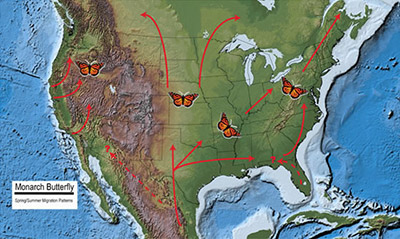
Monarch Butterfly Spring and Summer Migration Patterns. Base map source: USGS National Atlas.
3 In spring, migrating monarchs leave their wintering sites and head north. The ones in northern Mexico and Arizona head toward the East Coast or Canada. They fly over two thousand miles. The ones in California head north along the West Coast. En route, females lay eggs that hatch, turn into caterpillars, turn into butterflies, and continue the northward migration. Creatures that have never seen the summering grounds find their way by instinct.
Summertime and South
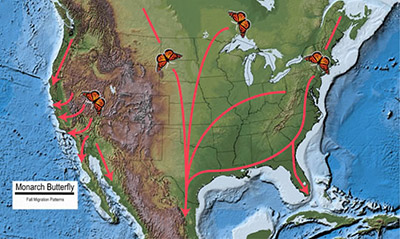
Monarch Butterfly Fall Migration Patterns. Base map source: USGS National Atlas.
4 Monarchs find temperate places to spend the summer. As summer ends, monarch populations begin their great southern migration. They fly south, dodging thunder storms and tornadoes to arrive again in Mexico, Arizona, or California.
Respond to source 2.
Answer the questions to identify controlling statements, supporting details, and visuals. Circle the letter of the best answer. Make a copy of this Google doc or download a Word template.
- Which best describes the essay focus?
A. Monarch butterflies follow an epic migration.
B. One population of butterflies overwinters in California.
C. Many dangers face monarch butterflies.
D. Monarch butterflies go through many stages of development.
- What main purpose do the maps serve?
A. They show the number of monarchs in North America.
B. They make the page bright and interesting.
C. They show the major migration routes.
D. They show that California monarchs don’t try as hard as East Coast ones.
- On the maps, infer what natural obstacle keeps western and eastern monarchs apart?
A. The Mississippi River
B. The East Coast
C. The Rocky Mountains
D. The Pacific Ocean
- In the second paragraph, infer where monarchs prefer to “roost.”
A. In farm fields
B. In trees
C. In caves
D. On telephone lines
- If you added a final paragraph at the end, what should it do?
A. Give fascinating statistics about the overall migration.
B. Give theories about how monarchs find their way.
C. Tell how to find more information about monarch migration.
D. Any of these would be good ways to build a final paragraph.
Closely read source 3.
Use SQ3R to closely read the following text.
Listen to "Source 3: Mothers’ Milkweed"
Source 3
Mothers’ Milkweed
By David Jones
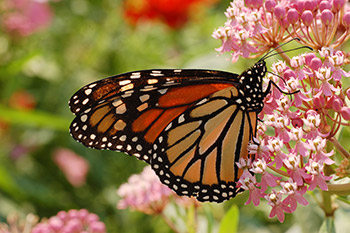
© Derek Ramsey / derekramsey.com, via Wikimedia Commons
1 When farmers see milkweeds sprouting in their fields, they see invasive weeds that mess with their crops and machines. When monarch butterflies see milkweeds, they see life itself. The monarch and the milkweed have an amazing relationship.
Fuzzy Nursery
2 A milkweed stalk is the first mother that any monarch knows. The tiny caterpillar hatches from an egg laid on a milkweed and starts to feed on the plant. Milkweeds exude a sticky sap called latex to trap most insect eaters, but monarch caterpillars have learned to munch in circles to avoid the goo. The plant also gives off a poison that can kill most insects. Instead, the caterpillar itself becomes poisonous so other animals leave it alone. The milkweed helps the monarch grow from a tiny green worm to a large, yellow-and-black striped caterpillar.
A Place to Hang
3 Once it is big enough, a monarch spins a chrysalis, often hanging from the milkweed itself. Inside, the creature transforms from a caterpillar to an insect with a segmented exoskeleton. It emerges two weeks later as an adult. The milkweed gives it a place to dry its wings until it can fly. Milkweeds fuel monarchs’ migrations across thousands of miles. The insects do not live long enough to go the whole way themselves. Instead, they stop and lay eggs on milkweeds along the way, and a new generation rises to continue the flight.
Milkweeds and Monarchs in Danger
4 Milkweeds are in decline across the country. Many crops are now genetically altered to resist herbicides, which means more herbicides get used. Milkweeds are vanishing as a result. If monarchs can’t find enough milkweeds along their routes, they will die in the middle of migrations. If disease or bad weather strikes in their wintering sites, whole populations of monarchs can be wiped out. New regulations to preserve milkweeds on migration routes could help save the monarch butterfly.
Respond to source 3.
Answer the questions to identify controlling statements, supporting details, and vocabulary. Circle the letter of the best answer. Make a copy of this Google doc or download a Word template.
- Which best describes the essay focus?
A. Milkweeds cause huge problems for farmers.
B. Milkweeds are sticky and poisonous.
C. Monarch butterflies rely on milkweeds for many things.
D. Monarch butterflies need to find a better source of food.
- Which detail best supports your answer to question 1?
A. The plant also gives off a poison that can kill most insects.
B. It emerges two weeks later as an adult.
C. The insects do not live long enough to go the whole way themselves.
D. If monarchs can’t find enough milkweeds along their routes, they will die in the middle of migrations.
- In paragraph 2, what does the word “exude” mean?
A. Prevent
B. Poison
C. Ooze
D. Absorb
- What clue in the second paragraph supports your answer to 3?
A. the first mother that any monarch knows
B. an egg laid on a milkweed
C. a sticky sap called latex
D. a poison that can kill most insects
- Infer what regulations could do to help monarchs. (paragraph 4)
A. Protect milkweeds along migration routes
B. Prevent wild animals from eating monarchs
C. Provide monarchs with caves to roost in
D. Breed monarchs in captivity
Compare sources.
In the following table, check the idea or ideas that each source supports. Some sources support more than one idea. Make a copy of this Google doc or download a Word template.
Viewing for Assessment
Some tests ask you to watch a video and respond to it in a paragraph or essay. Often, you'll need to refer to details from the video and any readings you have done. The following activities will help you practice viewing for assessment.
Carefully watch this video.
Pay close attention as you watch this video about monarchs and milkweed, produced by the federal government.
Watch the video "Monarchs and Milkweed"
Pay close attention as you watch this video about monarchs and milkweed, produced by the federal government.
Watch the video "Monarchs and Milkweed"
Respond to the video.
Answer the questions to test your understanding of the video “Monarchs and Milkweed.” Circle the letter of the best answer. Make a copy of this Google doc or download a Word template.
- Which best describes the video focus?
A. Milkweeds are a major source of milk.
B. Monarch butterflies should be called "milkweed butterflies."
C. Milkweeds help monarch butterflies in many ways.
D. The milk from weeds creates the butter in flies.
- Which detail best supports your answer to 1?
A. “There’s all this life that you’re going to find on this one plant.”
B. “No milkweed, no monarchs; it’s that simple.”
C. “Because we are a national park, milkweeds are protected.”
D. “There has been some genetic engineering more recently.”
- At minute 1:30, what does the word “larvae” mean?
A. butterfly
B. milkweed
C. feed
D. caterpillars
- How is a milkweed like a crib or nursery for monarchs?
A. A milkweed is a place where monarchs hatch and grow.
B. A milkweed gives monarchs milk.
C. A milkweed makes music when the wind blows.
D. A milkweed traps baby monarchs.
- Infer why a child would say a monarch is his or her favorite butterfly.
A. because it is poisonous
B. because it eats milkweeds
C. because it is beautiful
D. because it has a larva
Answer the questions to test your understanding of the video “Monarchs and Milkweed.” Circle the letter of the best answer. Make a copy of this Google doc or download a Word template.
A. Milkweeds are a major source of milk.
B. Monarch butterflies should be called "milkweed butterflies."
C. Milkweeds help monarch butterflies in many ways.
D. The milk from weeds creates the butter in flies.
A. “There’s all this life that you’re going to find on this one plant.”
B. “No milkweed, no monarchs; it’s that simple.”
C. “Because we are a national park, milkweeds are protected.”
D. “There has been some genetic engineering more recently.”
A. butterfly
B. milkweed
C. feed
D. caterpillars
A. A milkweed is a place where monarchs hatch and grow.
B. A milkweed gives monarchs milk.
C. A milkweed makes music when the wind blows.
D. A milkweed traps baby monarchs.
A. because it is poisonous
B. because it eats milkweeds
C. because it is beautiful
D. because it has a larva
Writing a Paragraph for Assessment
Some tests ask you to write a paragraph in response to sources you have read or viewed. The following activity will help you practice responding.
Analyze the writing prompt.
Read the following prompt, answer the PAST questions, write a topic sentence, and list details. Make a copy of this Google doc or download a Word template.
- Read the writing prompt.
- Answer the PAST questions.
- Write a topic sentence.
- List supporting details.
You have just read three articles and watched a video about monarch butterflies. Write a paragraph that explains how the additional sources expand your understanding from Source 1. Include at least two examples, naming the title and author of each source that you use.
Purpose?
Audience?
Subject?
Type?
Write a paragraph response.
Create an explanatory paragraph. Include a topic sentence that answers the prompt, body sentences that provide supporting details, and an ending sentence. Use details from the sources, giving credit with the title and author’s name.
Writing an Essay for Assessment
Some tests ask you to write an essay response to articles you have closely read. The following activity will help you practice.
Analyze an essay prompt.
Read the following prompt, answer the PAST questions, write a focus statement, and list details. Make a copy of this Google doc or download a Word template.
- Read the writing prompt.
- Answer the PAST questions.
- Write a focus statement.
- List supporting details.
Imagine that your teacher has assigned you to write an explanatory essay about the lives of monarch butterflies. You will be using the sources in this unit. Focus your thinking about monarch butterflies and create an essay. Include details from the sources to support your ideas.
Purpose?
Audience?
Subject?
Type?
Write an essay response.
Create an explanatory essay about monarch butterflies. Include a beginning paragraph that leads to your focus statement. Include middle paragraphs that support the focus with specific details. Finally, add an ending paragraph that wraps it all up. Use details from the sources, giving credit with the title and author’s name.
Revise and edit your essay.
Read your essay and ask yourself the following questions. Correct any problems you find. Make a copy of this Google doc or download a Word template.
- Is my essay on target with the prompt and the PAST questions?
- Do I have a clear focus statement and topic sentences?
- Do I support them with a variety of details?
- Are my beginning, middle, and ending paragraphs effective?
- Have I checked spelling?
- Are all of my sentences complete (no fragments or run-ons?)
Assessing with an Explanatory Rubric
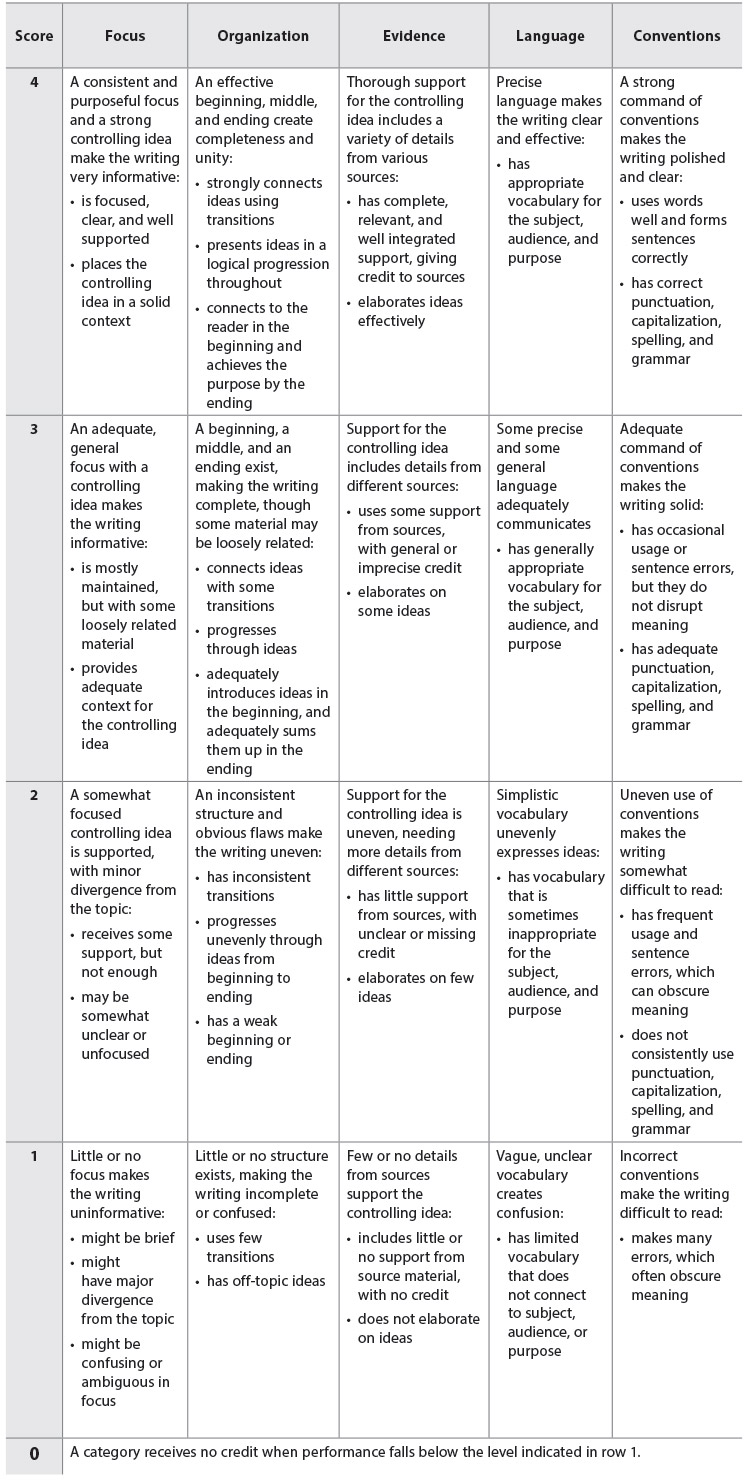
Test graders will use a rubric to judge the quality of your writing for assessment. By using the following rubric to judge your own writing, you can become aware of what testers are looking for and can improve your scores in the future.
Assess with a rubric.
Use the following rubric to score an explanatory essay for assessment. Make a copy of this Google doc or download a Word template.
Comments
Post a Comment